Missouri’s ground can be unpredictable. Much of the state sits on limestone and dolomite that slowly dissolve, creating caves, springs and sinkholes. Old mine workings lie beneath parts of several regions. And southeast Missouri sits atop the New Madrid seismic zone, which produced a series of major earthquakes in 1811 and 1812. When the ground moves and a home cracks, settles or drops, the first question usually isn’t how much the damage costs. It’s whether the policy covers it at all.
Karst geology and Missouri sinkholes
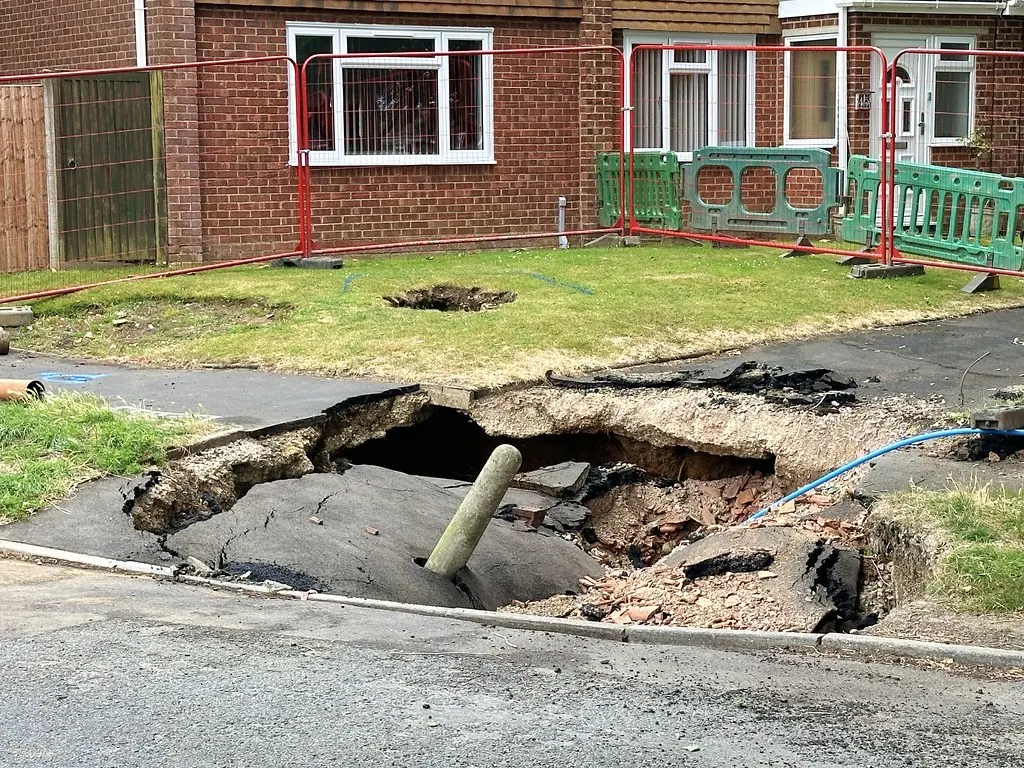
Karst is a landscape formed when water dissolves soluble bedrock. Missouri has extensive karst, especially across the Ozarks, around Springfield and Greene County, and in parts of the St. Louis region. Sinkholes can form slowly, as soil gradually washes into openings below, or suddenly, when the roof of an underground void gives way.
The Missouri Geological Survey, part of the Missouri Department of Natural Resources, maintains maps of known sinkholes and other karst features. Checking those maps can tell you whether your property sits in an area with documented sinkholes. That won’t decide a claim, but it’s useful context for you, your engineer and the insurer.
The earth movement exclusion
Most standard homeowners policies exclude earth movement. The exclusion typically lists things like earthquake, landslide, mudflow, subsidence and the sinking, rising or shifting of the ground. Depending on the wording, it may apply whether the movement was caused by natural forces or by human activity.
That exclusion is often why sinkhole and settlement claims are denied. Wording varies, though, and some policies carve out exceptions, such as ensuing fire or explosion, or provide specific sinkhole or collapse coverage. Read the exclusion and every endorsement closely. If the insurer has denied a claim under the earth movement exclusion, that’s a coverage dispute, and a Missouri attorney is the right person to evaluate it.
Collapse coverage
Many policies include an additional coverage for collapse, and it’s usually narrow. Typical language covers the abrupt collapse of a building or part of a building caused by specific perils, such as hidden decay, hidden insect damage, the weight of ice or snow, or defective materials used during construction. Many forms define collapse to exclude settling, cracking, shrinking, bulging and expansion.
Whether a particular event counts as collapse can be a close question that turns on the policy’s definition and the engineering facts. An engineer’s report that explains what happened, why and roughly when is usually the most important piece of evidence.
Mine subsidence
Missouri has a long mining history, including lead, zinc, coal and other materials, and old underground workings exist in several parts of the state. When those workings fail, the ground above can sink. Standard policies generally treat this as earth movement and exclude it unless specific coverage has been added. If you live in an area with a known mining history, ask your agent whether any mine subsidence coverage is available for your property, and review what your policy actually says.
If cracks, sticking doors or sloping floors appear in a home above old workings, document them with dated photos and measurements, and note when you first noticed each change. Ground movement often unfolds slowly, and a clear timeline helps an engineer judge the cause and helps everyone see how the damage progressed.
The New Madrid seismic zone and earthquake coverage
The New Madrid seismic zone runs through southeast Missouri, including the Bootheel, and into neighboring states along the Mississippi River. The 1811–1812 earthquakes were among the strongest ever recorded in the central United States, and smaller quakes still occur in the region. A strong event could affect much of eastern Missouri, including the St. Louis area.
Standard homeowners policies almost always exclude earthquake. Coverage is usually available as a separate endorsement or policy, often with its own percentage deductible that can be much larger than your regular deductible. Before anything happens, check your declarations page to see whether earthquake coverage is listed, what the deductible is and whether it applies to the dwelling, other structures and contents.
Where appraisal fits
Appraisal values covered damage. It isn’t a tool for deciding whether earth movement, sinkhole, collapse or earthquake damage is covered. In ground-movement claims, the order usually looks like this:
- The insurer investigates, often with an engineer, and makes a coverage decision.
- If coverage is denied, the dispute is about coverage, and you may want a Missouri attorney and your own engineer.
- If coverage is accepted, in whole or in part, but you disagree on the repair scope or cost, appraisal may be available under your policy.
Repair scope in these claims can be complicated. Foundation stabilization, piering, grout injection and structural repairs need careful engineering, and estimates can vary widely. Our sinkhole and ground collapse appraisal page explains how we approach those cases. For terms like karst, collapse and subsidence, see the appraisal dictionary.
Nothing here is legal advice. Your policy controls, and coverage questions belong with a Missouri attorney.