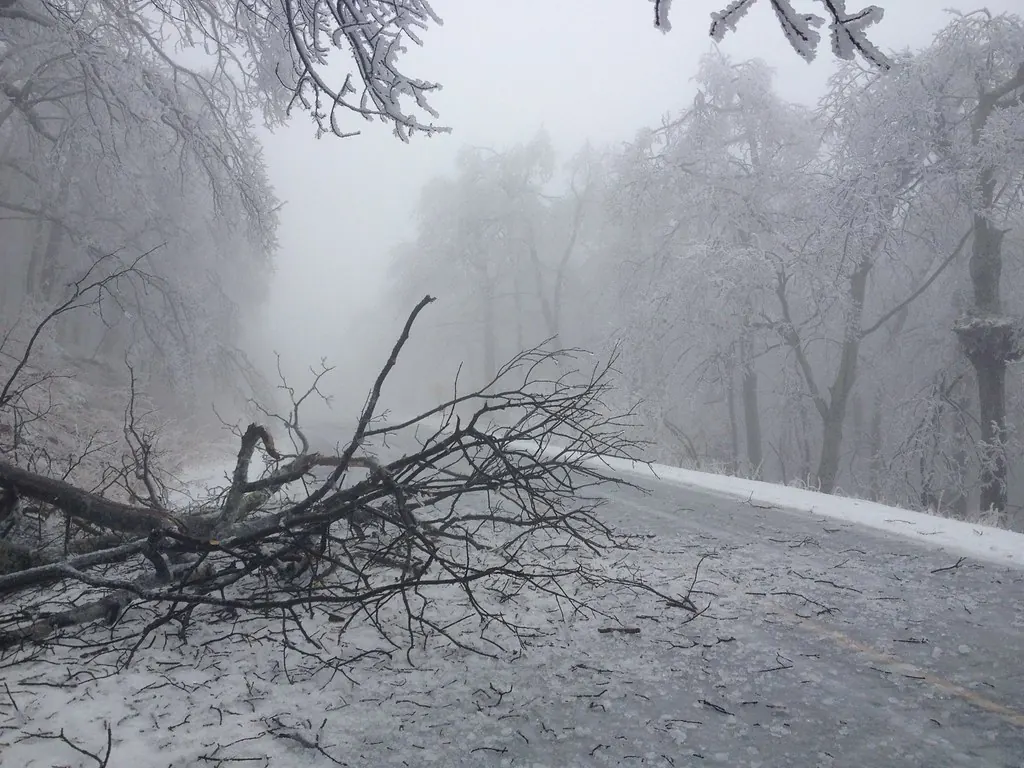
Missouri winters swing hard. A week of mild weather can turn into freezing rain overnight, coating every branch and power line in ice. The January 2007 ice storm in southwest Missouri left Springfield and surrounding counties with widespread tree damage and long power outages. Storms like that leave behind a particular set of claims: limbs through roofs, collapsed gutters, ice dams leaking into ceilings and pipes that froze when the heat went out.
Typical ice storm and freeze claims
- Falling limbs and trees: roof punctures, crushed decking, broken trusses, damaged siding and fences.
- Gutters and downspouts: torn off or bent under ice weight, often taking fascia and soffit with them.
- Ice dams: meltwater backing up under shingles at the eaves and leaking into attics, walls and ceilings.
- Frozen pipes: splits in supply lines during extended outages, often discovered when the thaw comes.
- Weight of ice: sagging or collapsed carports, porch roofs and outbuildings.
Where these estimates come up short
Roof damage under the limb
A limb through a roof is obvious. What’s less obvious is cracked decking and damaged trusses around the impact, or shingles broken when crews removed the limb. A proper scope looks at the whole area, often from the attic too.
Tree removal limits
Policies usually pay to remove a tree that fell on a covered structure, often with a per-tree and per-event cap. Trees that fell in the yard without hitting anything may not be covered at all. These limits are coverage terms; appraisal values the work within them.
Ice dam interior damage
Ice dam claims often involve stained ceilings, wet insulation and damp wall cavities. Carriers sometimes pay to paint over a stain without addressing wet insulation or drywall. Some policies treat ice dam leakage differently from other water damage, so read the wording.
Gutters and matching
Replacing one run of seamless gutter in a color that’s no longer made can leave the house mismatched. How matching is handled depends on your policy.
| Damage | Common carrier scope | What may be missing |
|---|---|---|
| Limb on roof | Patch shingles | Decking, trusses, gutters |
| Ice dam leak | Paint ceiling | Insulation, drywall, drying |
| Frozen pipe | Pipe repair only | Access, tear-out, flooring |
| Gutters | Single run | Fascia, matching runs |
Frozen pipes and the heat requirement
Most policies cover freeze damage if you used reasonable care to maintain heat or shut off and drain the water. During a regional power outage, that care may look different, and the facts matter. Vacant homes are a frequent sticking point. Once coverage is accepted, the tear-out, drying and rebuild are standard appraisal territory. For more on water losses, see burst pipe and water damage appraisal.
Illustrative example: a carrier might pay $3,200 to patch a roof and remove a limb, while an inspection finds cracked decking, a broken truss and wet attic insulation that bring the repair closer to $11,000. Appraisal weighs documented scope, not guesses.
What to do after an ice storm
- Stay clear of downed power lines and report them to the utility.
- Photograph limbs on structures before removal, and keep tree service invoices.
- Tarp roof openings and keep receipts; preventing further damage is your duty under the policy.
- If the power is out for days, take steps to protect plumbing, and document what you did.
- Check the attic for wet insulation once things thaw.
Winter storm damage sometimes doesn’t show until spring. If you find late leaks, report them promptly and note when you first noticed. Our claim toolkit includes a winter damage checklist.
Questions about ice storm & freeze damage appraisal
Does insurance pay to remove a tree that fell in my yard but didn’t hit anything?
Often not, or only in limited situations. Many policies pay for tree removal only when the tree damages a covered structure, usually with a per-tree cap.
Are ice dam leaks covered by homeowners insurance?
Many Missouri policies cover interior damage from ice dams, but wording varies. Check the policy’s water damage and ice dam language before assuming either way.
My pipes froze during a power outage. Is that covered?
Freeze damage is commonly covered if you took reasonable steps to maintain heat or drain the system. Whether those steps were reasonable during an outage is a fact question for the carrier and, if disputed, an attorney.