Commercial claims in Missouri often involve large flat or low-slope roofs, multiple buildings, specialized systems and a policy with endorsements stacked several pages deep. When an insurer’s estimate for a strip center in Springfield, a warehouse in the Riverside area, or a church in Jefferson County lands far below what contractors are bidding, appraisal may be the cleanest way to settle the amount of loss without a lawsuit.
Properties we handle
- Offices and retail: strip centers, standalone stores, medical offices, mixed-use buildings.
- Industrial: warehouses, light manufacturing, metal buildings, agricultural outbuildings with commercial coverage.
- Churches and nonprofits: sanctuaries with steep roofs, stained glass, fellowship halls and gyms.
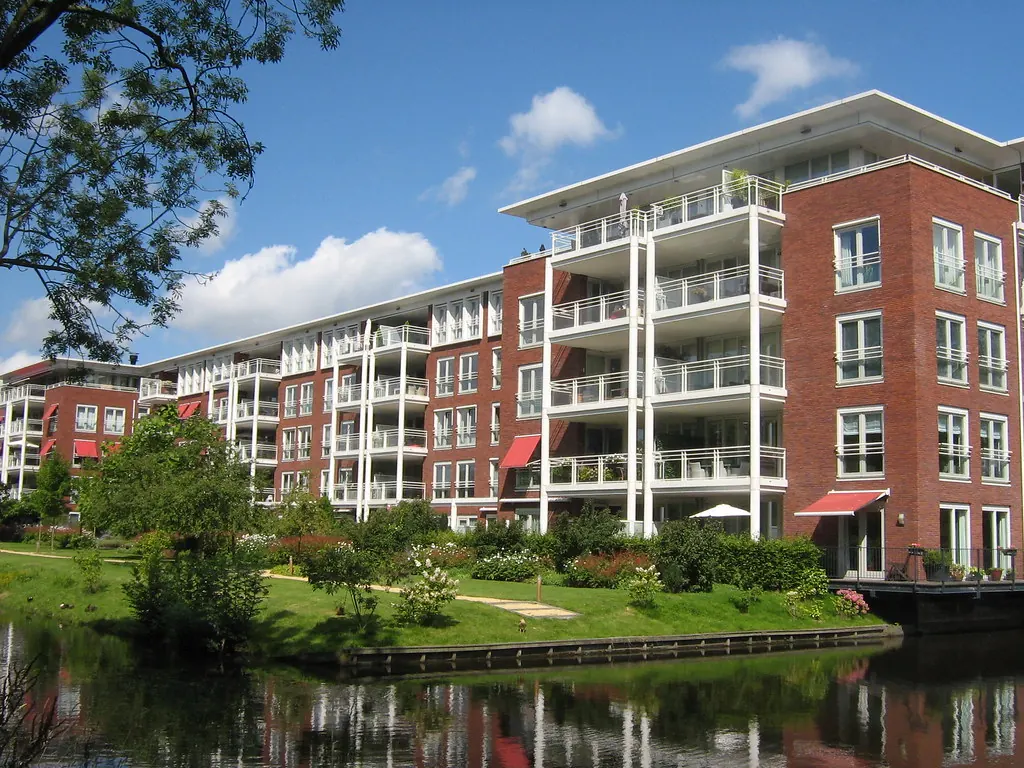
- Apartments: garden-style complexes with many identical buildings and shared roof and siding systems.
- Condo and HOA associations: master policies covering roofs, exteriors and common elements.
Where commercial estimates diverge
Roof systems
TPO, EPDM, modified bitumen, built-up and standing-seam metal roofs each have their own failure patterns. Hail can bruise insulation board under a membrane without obvious surface marks. Core samples and moisture surveys may be needed to establish the scope.
Building code and ordinance-or-law
Re-roofing a large commercial building can trigger insulation, drainage and parapet requirements under the local building code. Whether those costs are paid usually depends on an ordinance-or-law endorsement and its limits.
Multiple buildings, one claim
Apartment and HOA claims can involve dozens of structures. A carrier may sample a few and extrapolate. We push for a scope based on what’s actually on each building.
Business income
Lost income and extra expense often run alongside the property claim. Those figures can be part of an appraisal when coverage isn’t in dispute, though they usually need an accountant’s input.
Working with HOA boards
Association boards have duties to every owner, and they rarely have a construction professional on the board. We give boards a clear written comparison of the carrier estimate and ours, explain the appraisal process in plain terms, and keep management companies in the loop. The board decides whether to invoke appraisal; we don’t push it.
One common question: who covers what between the master policy and individual unit-owner policies. That split comes from the declaration, bylaws and policy language, and it should be settled before arguing about price.
| Issue | What we look at |
|---|---|
| Roof scope | Membrane, insulation, flashings, drains |
| Pricing | Commercial labor rates in your market |
| Code upgrades | Ordinance-or-law limits and triggers |
| Coinsurance | Insured value vs. replacement cost |
Coinsurance and valuation
Many commercial policies have a coinsurance clause. If the building was insured for less than the required percentage of its value, the payment can be reduced. Appraisal sets the amount of loss, but valuation questions like this may come up alongside it, and they can affect the final check. Some coinsurance and valuation disputes cross into coverage, which is a question for a Missouri attorney.
Illustrative example only: a 40-unit HOA might see a carrier estimate covering roof repairs on six buildings while contractors bid full replacement on all of them. Appraisal lets both sides put documented scope in front of a neutral panel.
Getting started
Send us the policy, the carrier’s estimate and any engineer or roofing consultant reports. We’ll review the scope at no charge and tell you whether appraisal looks like a fit. Start on the contact page, or see the appraisal roadmap for the full sequence.
Questions about commercial & hoa claim appraisal
Can an HOA board invoke appraisal without a vote of all owners?
That depends on the association’s governing documents. Many boards have authority to manage insurance claims, but check the bylaws and ask the association’s attorney if it’s unclear.
Does appraisal work on business income claims?
It can, when the dispute is about the amount of lost income or extra expense rather than whether coverage applies. These claims usually need financial records and an accountant’s input.
What if the carrier only inspected a few buildings?
We document each building separately. Sampling can miss damage, and the appraisal panel can consider building-by-building evidence.